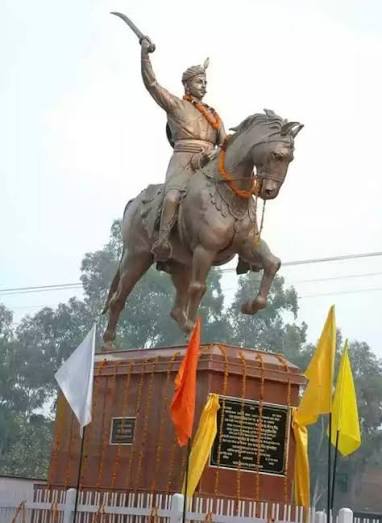
Equestrian statue of Rao Tula Ram at Rao Tula Ram Chowk
Heritage · Circle of Heroes

Rao Tula Ram1825 – 1863 · Ahirwal hero of 1857

Above: equestrian statue at Rao Tula Ram Chowk. Exact chowk location to be confirmed — send us the plaque text and any historical photos.Photo credit: Mahendergarh.com community · credit pending
1857 uprising
Overthrew British authority across Rewari, Narnaul, Mahendragarh and Kanina — declaring self-rule from Rewari.
Battle of Nasibpur
Fought a fierce pitched battle at Nasibpur near Narnaul against British forces (November 1857) — a turning point remembered across the region.
Ahirwal pride
His name anchors the martial memory of southern Haryana — chowks, roads and schools across the region carry it.
The story

Born in Rampura in 1825 into the ruling Ahir family of Rewari, Rao Tula Ram was among the earliest and most consequential Indian leaders of the 1857 First War of Independence. When the sepoys of the Delhi cantonments rose in May 1857, he moved swiftly — overthrowing British authority across the Ahirwal belt of Rewari, Narnaul, Mahendragarh and Kanina, and organising arms, cavalry and cannon from local resources.

On 16 November 1857, at Nasibpur near Narnaul, his forces met the British column under Colonel Gerrard in a fierce battle. Though the field was ultimately lost, the resistance shattered the myth of British invincibility in the region and cost the coloniser their commander. Rao Tula Ram then rode westward, seeking help from Iran and Afghanistan for the freedom struggle — and died in Kabul in 1863, far from home, still working for India's independence.

Circle of Heroes · वीर-वृत्त

Hero statues & chowks around the city

A new community-submittable map layer marking statues, chowks and shaheed smaraks named after the district's heroes — from Rao Tula Ram Chowk to village-level memorial gates. Send a photo and a plaque reading and we'll add the pin.

Correct or enrich this page →·Covered by the site disclaimer.